
Heifer Senegal Boosts Food Self-Sufficiency for Tabaski Holiday
During Senegal’s lean season, demand for sheep peaks. A Heifer-supported initiative is helping smallholder farmers improve production and build food self-sufficiency.



We supply farmers with tools and services to overcome climate challenges, participate in markets and earn more income.
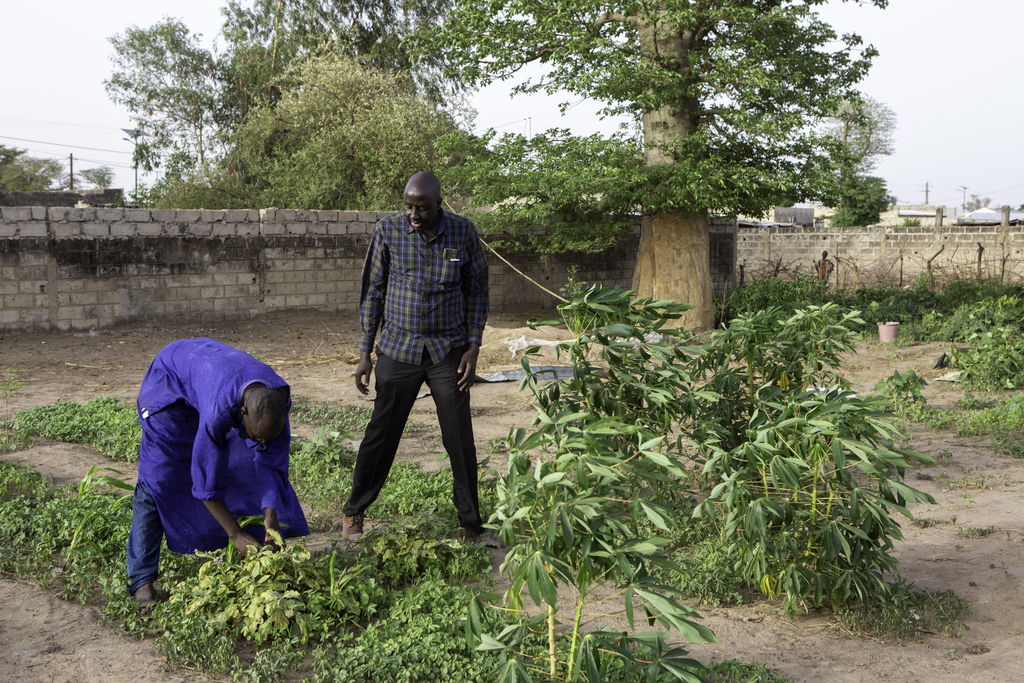
Senegal’s economy remains closely tied to agriculture, particularly in rural areas where farming continues to serve as a primary source of income even as the country’s economic structure shifts. In 2025, agriculture accounted for about 30 percent of total employment, while agriculture, forestry and fishing contributed roughly 17 percent to GDP in 2024, underscoring the sector’s central role in food production and rural livelihoods. Yet most agricultural activity remains small-scale and highly exposed to risk. Unpredictable rainfall, limited access to climate information, constrained financing and low adoption of modern farming practices limit productivity and income for many smallholder households.
These challenges are amplified by broader labor market dynamics. Senegal has a young population, and while official youth unemployment rates appear relatively low, most young people work in informal, low-paying jobs, particularly in agriculture and rural economies. Nearly nine in 10 workers are employed informally, according to recent labor data. The lack of formal employment opportunities restricts access to stable income, skill development and social protection. Together, these realities point to the need for practical, locally rooted agricultural solutions that improve productivity, strengthen resilience and create more reliable pathways to income and food security for rural communities.
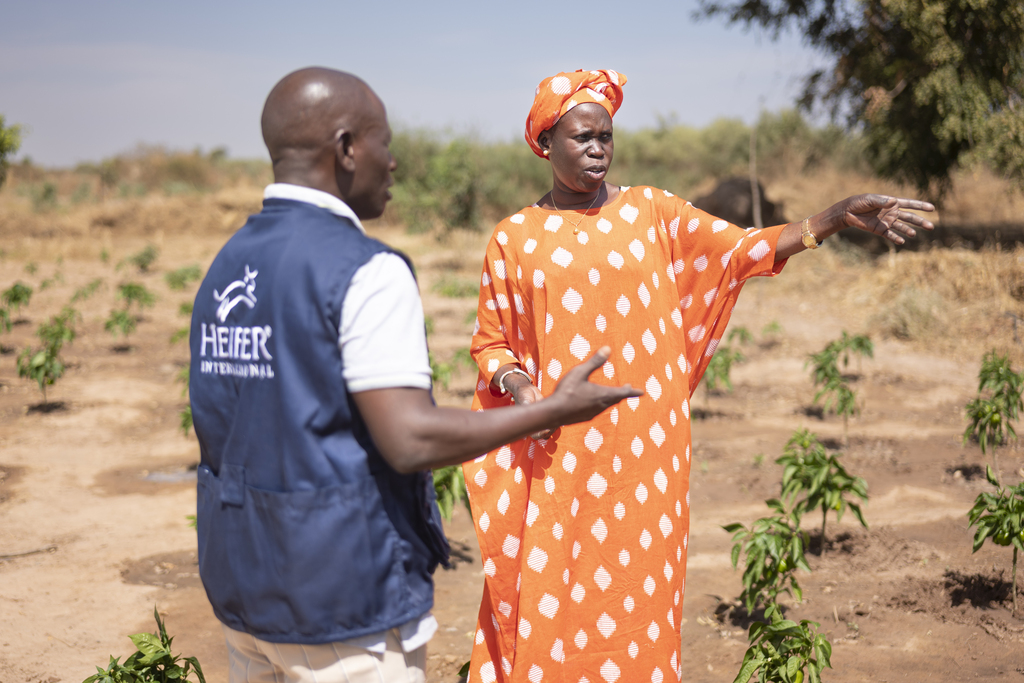
Heifer Senegal is working toward a prosperous world where communities live in harmony and share the resources of a healthy planet. Heifer’s community-led development model is instrumental in fostering this work in Senegal, empowering community members to establish shared values and goals and work together toward meaningful change and growth.
With this foundation in place, we work alongside strategic partners — including cooperatives, municipalities and technical experts — to offer farming families high-quality seeds, agricultural and business training, support to improve harvest management and processing, and climate and market information to improve their productivity and participation in the local agricultural economy.
Our primary objective is helping families achieve a sustainable living income, our measure for the amount of money required for a decent life — including safe shelter, nutritious food, clothing, education and health care — while also reaching additional benchmarks for economic and climate resilience.
Year Heifer launched in Senegal
Household participants in 2025
Household participants to date
Heifer International’s work is organized at the country level into signature programs focused on large-scale, measurable and sustainable impact achieved by building partnerships at all levels. Each program supports farmers through time-bound projects designed to increase their household income.
Heifer’s signature program in Senegal, Building Women and Youth Economic Resilience in the Sahel, targets financial stability for 216,000 households in the Sahel region. With a focus on women and youth, the program amplifies their market competitiveness and participation, enabling them to earn enough money to live a dignified life.
Project timeline: 2022–2027
In partnership with the Association of Mayors of Senegal and the Ministry of Livestock and Animal Production, the Mayors’ Initiative for Sheep Self-Sufficiency (IMAM2) project aims to empower 121,410 sheep farming households in 10 regions to achieve sustainable living incomes by mid-2026. The initiative strengthens the capacity of self-help groups that support women working together to build businesses, provides livestock management instruction, trains community animal health workers and distributes livestock and fodder seeds to establish a strong foundation for increased sheep production, productivity and marketing.
Project timeline: 2023–2028
The Meliteji Wasu (Sahel Dairy) Project — a partnership between Heifer International, Laiterie du Berger and the Mastercard Foundation — plans to revolutionize Senegal’s dairy sector. This five-year venture intends to integrate 600,000 families, primarily youth and women, into sustainable dairy value chains through improved milk production, cooperative development and expanded infrastructure. The project will modernize livestock systems and create 50,000 jobs.
Project timeline: 2025–2027
The Public Agricultural WAQF for Goat Farming (WAPEC) project is funded by Waqf, a public philanthropic agency, and implemented by Heifer Senegal in the departments of Podor in the north and Koungheul in the southeast. Grounded in the principles of Islamic philanthropy, the project strengthens economic resilience and expands opportunities for rural women through goat farming, cooperative structures and community-based financing. In its pilot phase, WAPEC targets 70 percent of women beneficiaries and supports the creation of 100 mutual aid groups for women and youth. The project pairs livestock provision with technical and entrepreneurship training and improved access to finance and markets to support inclusive rural growth.
During Senegal’s lean season, demand for sheep peaks. A Heifer-supported initiative is helping smallholder farmers improve production and build food self-sufficiency.

In Senegal, Nafi is leading her village in the fight against malnutrition, turning nutrient-rich porridge into a powerful tool for food security.

In a community where togetherness is key, women uplift one another through the practice of Passing on the Gift®.
Nar Diop, Climate Services for Increased Resilience and Productivity (CSRP) Participant
Cart is empty
Success!
Please be patient while we send you to a confirmation page.
We are unable to process your request. Please try again, or view common solutions on our help page. You can also contact our Donor Services team at 855.9HUNGER (855.948.6437).
Success!
Please be patient while we send you to a confirmation page.
We are unable to process your request. Please try again, or view common solutions on our help page. You can also contact our Donor Services team at 855.9HUNGER (855.948.6437).

