
Impact Report: How Rwandan Farmers Are Building Prosperity Together
A new assessment in Rwanda shows major improvements in income, nutrition and social cohesion among households engaged in PRISM.



We bridge the gap for smallholder farms, connecting them to value-expanding markets, agricultural knowledge and financial empowerment.
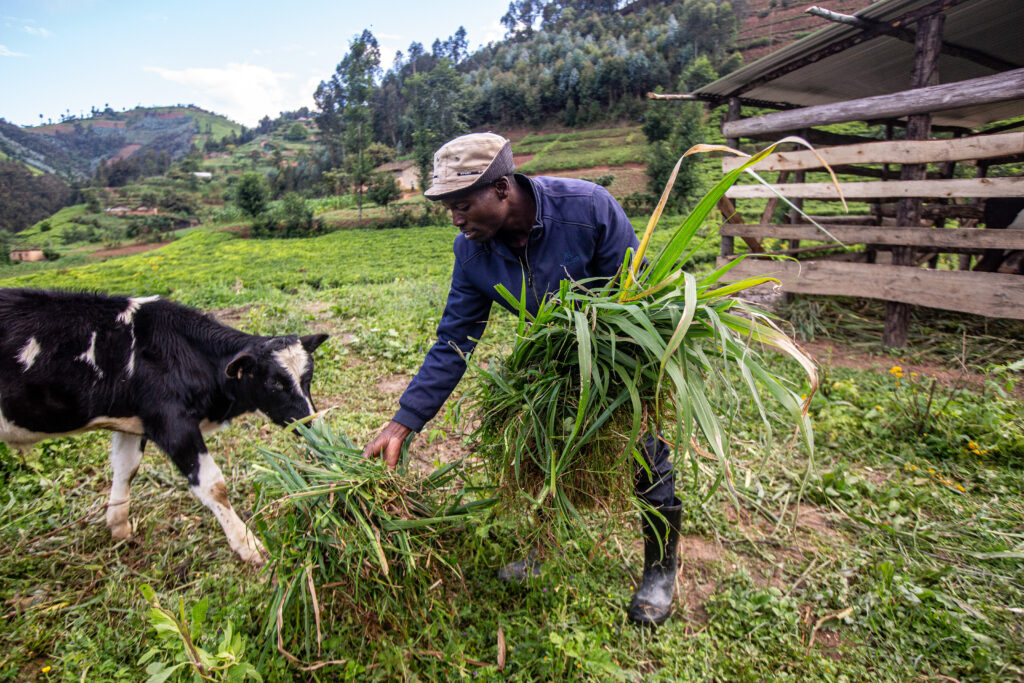 Rwanda’s economic growth remains closely tied to smallholder agriculture, with about 65 percent of households relying on farming as a primary source of income. Most agricultural households manage very small plots, with nearly 72 percent cultivating less than half a hectare, which places firm limits on productivity and earning potential. Despite fertile land and favorable conditions, population pressure and land constraints continue to strain farm output.
As Rwanda’s population increases, the country must raise agricultural yields to meet food demand while supporting rural livelihoods. Yet many farmers lack access to the practical skills and services needed to improve results. Recent national data show that most farmers have only primary-level education, and fewer than one in five have completed secondary school, heightening the need for hands-on training and reliable extension support. Without stronger access to knowledge, markets and income pathways, many rural families remain locked in low returns from agriculture, with direct consequences for food security and household stability.
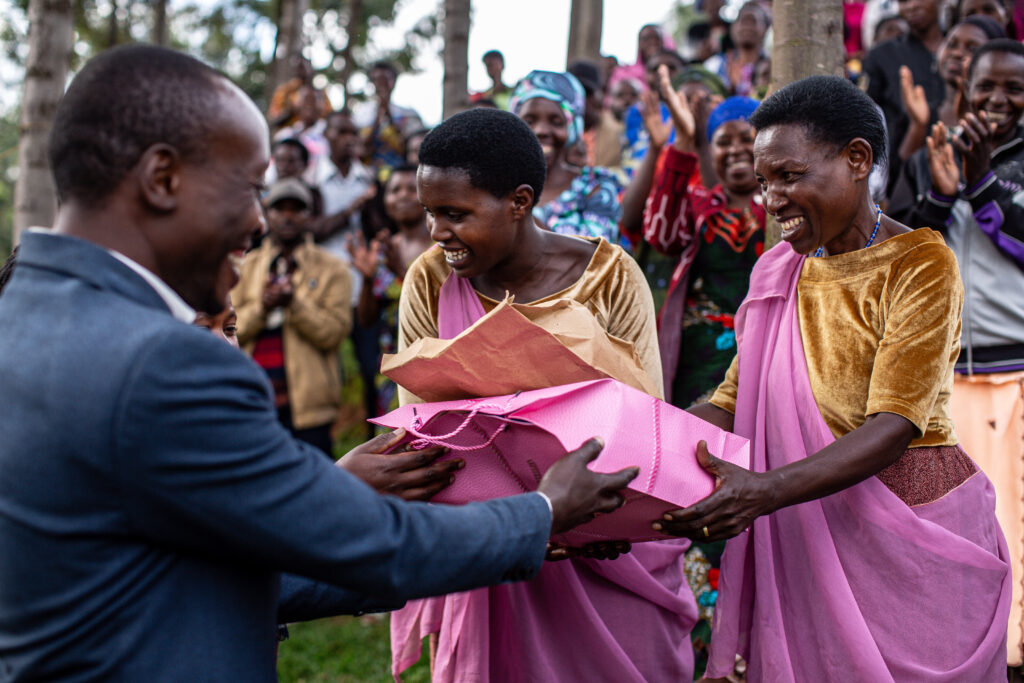 Since its inception in 2000, Heifer Rwanda has collaborated with partners and donors — including the government of Rwanda, the International Fund for Agricultural Development (IFAD) and the African Development Bank (AfDB) — to increase impact and reach. Heifer Rwanda now has several projects covering 28 of the country’s 30 districts.
Heifer Rwanda has evolved alongside the government’s agenda and vision for the region, beginning with asset provision to help families manage economic and environmental shocks, then expanding into holistic community development and, more recently, value chain and market development.
Our primary objective is helping families achieve a sustainable living income, our measure for the amount of money required for a decent life — including safe shelter, nutritious food, clothing, education and health care — while also reaching additional benchmarks for economic and climate resilience.
Year Heifer launched in Rwanda
Household participants in 2025
Household participants to date
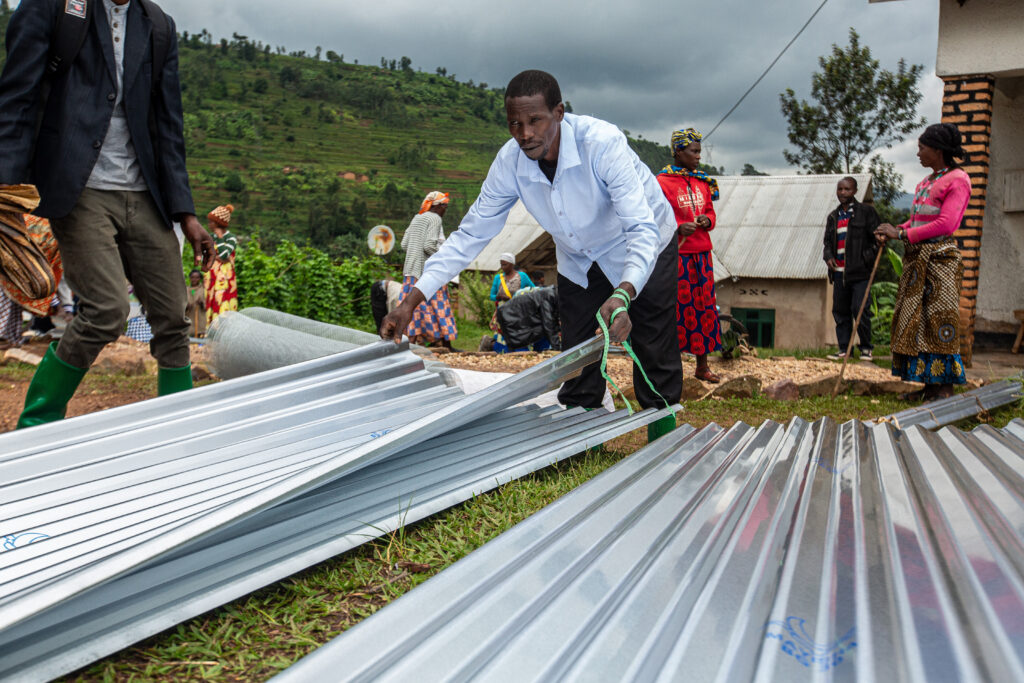 Heifer International’s work is organized at the country level into signature programs focused on large-scale, measurable and sustainable impact achieved by building partnerships at all levels. Each program supports farmers through time-bound projects designed to increase their household income.
The Agribusiness Transformation signature program is designed to support farmers, women, youth and entrepreneurs as they build stronger agriculture and livestock businesses. By combining production support, skill development, finance and market access, the program helps rural households increase income and participate in competitive value chains across the country.
Project duration: 2022–present
The AYuTe Africa Challenge Rwanda is an annual national competition that awards cash grants to Rwandan agritech innovators with ideas to transform farming and food production. The national competition is part of a regional program, AYuTe Africa NextGen, which supports young African entrepreneurs in developing solutions to address smallholder farmers’ challenges, providing necessary incubation and financing to drive agribusiness innovation across the continent.
Project timeline: 2021–2026
The Partnership for Resilient and Inclusive Small Livestock Markets (PRISM) project is a five-year effort to enhance value chains for small livestock farming operations. Active in 15 districts across the northern, southern and western provinces, PRISM focuses on livestock production, skill development and local market support to help farmers increase income and improve household diets. By fiscal year 2023, participating households received 20,000 chickens, 1,000 pigs, 2,747 goats and 640 sheep. The effort also financed livestock housing for 3,000 households and supported 63 Rwandan youth as they entered commercial production.
Project timeline: 2024–2030
The Promoting Smallholder Agro-Export Competitiveness (PSAC) project is a transformative initiative that aims to boost rural incomes by equipping smallholder farmers — particularly women and youth — with the tools, training and support needed to thrive in export-oriented agriculture. By focusing on high-potential value chains, PSAC promotes climate-smart, inclusive growth across 14 districts, prioritizing some of Rwanda’s most vulnerable communities. The project builds on proven models, including Heifer International’s impact-driven finance work, to strengthen market access, elevate product quality and foster sustainable livelihoods for over 56,000 smallholder households.
Project timeline: 2024–2030
The Rwanda Dairy Development Project Phase II (RDDP II) works to improve the livelihoods of 175,000 families across 27 districts by strengthening the country’s dairy sector. The project expands access to feed, water, animal health and breeding services while providing training in climate-smart and nature-based practices. Heifer will invest in milk collection and storage facilities, support collective marketing and promote awareness of dairy’s nutritional value. The effort also advances digital tools, financial access and a supportive policy environment to support long-term viability. Working with partners such as the International Fund for Agricultural Development, the six-year initiative will build a competitive, climate-resilient dairy value chain.
Project duration: 2025–2027
The Rwanda Dairy Market Systems (RDMS) project is a multi-year effort to strengthen dairy markets and raise incomes for smallholder farmers in Rwanda’s Eastern Province. Implemented in four districts, the project focuses on improving access to feed, water, mechanization and other services that support daily dairy production. Working with public and private partners, the project also builds stronger links between farmers and buyers to improve productivity and market competitiveness. Special attention is given to expanding job opportunities for women and youth while supporting food security and nutrition for farming households.
A new assessment in Rwanda shows major improvements in income, nutrition and social cohesion among households engaged in PRISM.

A 2024 report by Aceli Africa and Dalberg confirms the significant impact of the collaboration between Heifer International and Hello Tractor in unlocking agricultural finance for resource constrained smallholder farmers across Africa.

In rural Rwanda, a fast-growing aquatic plant helps smallholder farmers cut costs, boost production and adapt to a changing climate.
Providence Muhawenimana, Partnership for Resilient and Inclusive Small Livestock Markets (PRISM) Beneficiary
Cart is empty
Success!
Please be patient while we send you to a confirmation page.
We are unable to process your request. Please try again, or view common solutions on our help page. You can also contact our Donor Services team at 855.9HUNGER (855.948.6437).
Success!
Please be patient while we send you to a confirmation page.
We are unable to process your request. Please try again, or view common solutions on our help page. You can also contact our Donor Services team at 855.9HUNGER (855.948.6437).

